

Trauma Counseling · Knoxville, TN
Something happened. And everything reorganized around it.
You don't have to call it trauma. You don't have to have a diagnosis or a name for it. If something happened that changed how you move through the world, how you sleep, how you trust, how present you can be in your own life; you're in the right place.
What We Are Actually Talking About
Trauma isn’t what happened. It’s what happened inside you when it did.
The word trauma gets used loosely, and that's worth addressing plainly. Trauma isn't defined by the size of the event. It's defined by what the event did to your nervous system, how it reorganized your sense of safety, your relationship to other people, your ability to be present in your own life without the past arriving uninvited.
Two people can live through the same experience and carry completely different weight from it. That's not weakness. That's the difference between nervous systems, between histories, between what each person had available to absorb the impact.
What qualifies as trauma is anything that overwhelmed your capacity to process it at the time it happened. A betrayal discovered quietly, alone, at two in the morning. A loss that came without warning. A relationship that gradually, systematically, taught you not to trust what you saw. A single moment that changed the story you'd been telling yourself about your life, your marriage, your future.
None of those require a diagnosis to be real. They require understanding. And they require support that knows how to work with them.
How Trauma Works
Your worldview is the operating system. Trauma crashed it.
Before something happened, you had a working model of reality. Not a perfect one, nobody does, but a functional one. You knew, more or less, what to expect from the world. You knew who you could trust. You knew what your life was. You could wake up in the morning and navigate the day without questioning the basic premises underneath it.
Trauma crashes that operating system. Not metaphorically. Functionally. The beliefs and assumptions that let you move through the world without constant vigilance, that people are mostly who they appear to be, that the future is roughly predictable, that the person you share your life with is who you believe them to be, those assumptions stop working. And when an operating system crashes, you don't just lose the program that was open. You lose the ability to run anything smoothly until the system is rebuilt.
That's what recovery actually is. Not getting over what happened. Not returning to who you were before, that person lived in a world that turned out to be different from what they thought it was. Recovery is the rebuild. Getting the system running again, on honest ground, with a worldview that has been tested against reality and still holds.
That rebuild takes longer than expected.
But it’s possible.
What This Looks Like From the Inside
The signs that something is still running in the background.
Trauma doesn't announce itself cleanly. It shows up in the texture of daily life, in patterns you may not have connected to what happened, in responses that feel disproportionate, in a persistent sense that something is wrong even when nothing is currently wrong.
Your body is keeping score.
Sleep that doesn't come, or doesn't restore. A jaw that's been clenched for months. Tension that lives in your shoulders, your chest, your gut, that you've stopped noticing because it's been there so long. Your body registered what happened before your mind caught up, and it's been running a low-grade alarm ever since.
The past keeps arriving in the present.
Not as a memory you can set aside. As a full experience, image, feeling, pressure, that lands in the middle of an ordinary moment and takes you somewhere you didn't choose to go. Your nervous system cannot reliably distinguish between remembering and reliving.
You're exhausted in a way that sleep doesn't fix.
Not just physically. The kind of tired that comes from running something demanding in the background, continuously, without a break. Managing. Vigilant. Holding things together while also holding things down.
You're not fully present in your own life.
There's a version of you that shows up for work, for the children, for the logistics of a life that didn't stop, and a version that is somewhere else entirely. The distance between those two versions is quietly exhausting.
Things that used to matter don't, or don't in the same way.
A flatness where there used to be feeling. Not depression exactly, more like the volume has been turned down on experiences that once had depth.
These aren't signs that something is permanently broken. They are signs that a nervous system is still protecting you from something that felt dangerous. The problem is that the protection response outlasts the danger. And over time, what once kept you safe begins to cost more than it saves.
The Specific Territory
Trauma takes different shapes. These are the ones we work with here.
Trauma isn't one thing. It arrives differently depending on how it happened, who was involved, and what it disrupted.
Betrayal trauma
Happens when the person who hurt you was also the person you depended on. The betrayal didn't just damage trust in them, it damaged trust in your own perception, your ability to read a room, know what's true, trust what you feel. It has its own page here because it deserves the space.
Worldview Collapse
Happens when something you believed, about your marriage, your family, your faith, your future, turns out to be untrue. Not a small revision. A foundational one that leaves you not just grieving a loss but questioning the ground you were standing on.
Relational trauma
Accumulates over time in a relationship where the environment was consistently unpredictable, unsafe, or dishonest. Not one detonating event but a sustained atmosphere of walking on eggshells, there's no single moment to point to, and its weight is very real.
Loss and grief
When the loss was sudden, violent, ambiguous, or unacknowledged by the people around you. When grief was supposed to be over by now and isn't. When what you lost wasn't just a person but a version of your life, your identity, your understanding of what was possible.
If what you're carrying doesn't fit neatly into any of these, that's alright. A real conversation will help sort out what it is and what you need.
The Approach
There is a sequence. Skipping it is why recovery stalls.
Trauma recovery has a natural order. When that order is respected, the work moves. When it's rushed, when processing begins before the foundation is in place, the work collapses back on itself, and the person concludes that nothing helps. That conclusion is almost never true.
Safety
Safety is where everything begins, not reassurance, safety. The felt experience, in your body, of being in an environment that is not a threat. Building the experience of safety means slowing down, reducing the things that activate the alarm, and giving the system enough calm repetition to begin to recalibrate. Until this is in place, nothing else builds on solid ground.
Emotional regulation
The ability to be in the presence of difficult material, memories, feelings, conversations, without being fully overwhelmed by them. Not suppressing. Not avoiding. Developing the capacity to feel what is true while maintaining enough of a foothold in the present to keep going. This is a learnable skill. It is also the skill that makes everything else possible.
Processing
This is not the stage where we rehash what happened. Talking about trauma to be talking about it can retraumatize. What we do instead is talk about living, the things that matter to you and the things that pull you away from them. We work from an observational distance, looking at your experience rather than being swallowed by it. Curious rather than consumed.
From that distance, something becomes possible that isn't possible from inside the wound. You start to notice your life again. A chubby bird on a branch. Sun on your face. Small things that are actually large things, signs that you are still here, still capable of contact with the world. That noticing is not trivial. It is the work.
Rebuilding
What emerges from that work is something more durable than what existed before. A revised worldview that’s been tested for functionality. A sense of self that survived something hard and knows that it did. Ready for something new. Relationships, with other people and with yourself, built on honest ground rather than on what you needed to believe before you knew what you know now.
This is not a fast process. It is also not an endless one. And it moves more reliably with skilled support than without it.
Where to Next
Let’s talk.
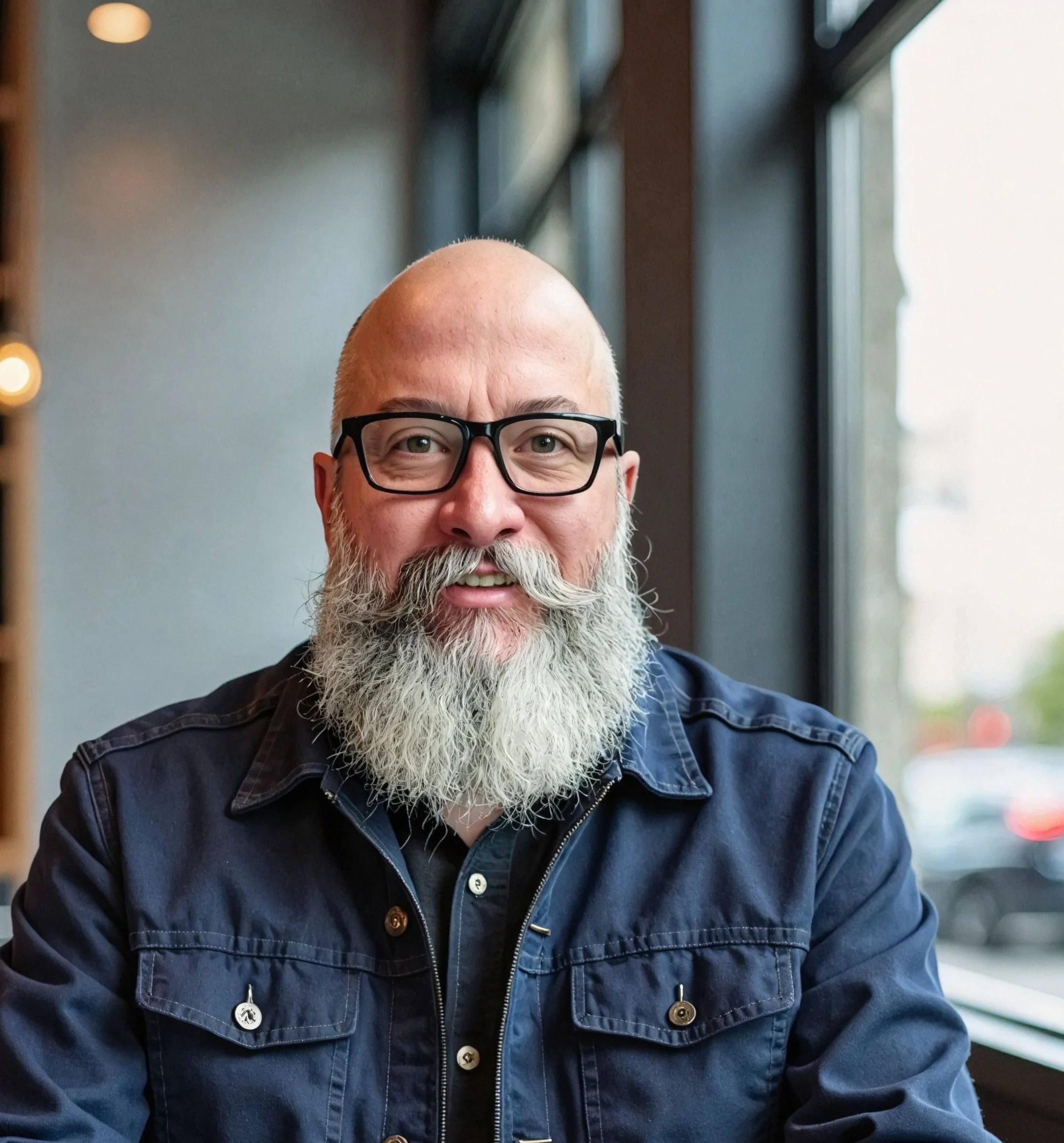
The conversation is free, low stakes, and takes 30 minutes. There’s time to meet, ask questions, and find out how I might help you specifically.
Serving Knoxville, Oak Ridge, Lenoir City, and Clinton · Telehealth available across Tennessee