
Anxiety Counseling · Knoxville, TN
Anxiety Counseling
You've been managing it. Coping with it. Working around it. And it's still there, because you can't cope your way out of a nervous system. You're going to need it. The question is whether it's driving the bus, or you are.
What You’re Actually Living With
You Probably Don’t Think of Anxiety. You Think of It as Just How Things Are.
Most people who come in don't arrive with a diagnosis. They arrive with a description, procrastination, difficulty concentrating, a mind that pulls hard toward the wrong things and won't let go. A personality that feels hijacked. A world that has been quietly, gradually getting smaller.
Anxiety has become a catch-all word. What it usually means, underneath the label, is that your nervous system has learned to treat a wide range of ordinary experiences as threatening, and avoiding that activation has become its own full-time job. The avoidance works, in a limited way. The uncomfortable feeling goes down. And then it comes back. So you avoid more. The world gets a little smaller each time.
What you’re carrying might look like one of these:
Procrastination that you can’t think your way out of, no matter how many times you try
Focus that slips away from what matters and locks onto something else entirely, a worry, a loop, a conversation that hasn’t happened yet
Muscle tension that lives in your jaw, shoulders, or chest, you stopped noticing because it’s been there so long
Rapid thoughts that won’t slow down, running the same material over and over without landing anywhere
Feeling awkward or overwhelmed in social settings, in crowds, in places that didn’t used to bother you
Relationships and new experiences you’ve stopped reaching for, because the activation isn’t worth it
The exhaustion of keeping your world carefully managed enough that nothing trips the wire, and the knowledge that it’s costing you
There's usually a precursor — a period that was genuinely hard, a confrontation with life that couldn't be avoided. Work, school, family, something interpersonal that changed the calibration. Some people have been carrying this since before they could name it. Others had their world contract and found that re-expanding felt impossible in ways they hadn't expected. Some have been on medication that helped some, with side effects that complicated things. Some just know, the way they've always known, that life is going to come for them eventually.
Whatever the picture, the common thread is this:
The coping helped, and then it stopped being enough.
And you’re here.
You can’t cope your way out of a nervous system.
What’s Actually Happening
A Portion of Anxiety Is Adaptive. You Were Built This Way for a Reason
Here's something that doesn't get said enough: anxiety isn't the enemy. Humans survived because of it. The nervous system that scans for threat, flags uncertainty, and sounds the alarm, that system kept your ancestors alive. It still has a job to do. The goal was never to eliminate it.
The problem isn't the alarm. The problem is the calibration. Somewhere along the way, through genetics, family history, attachment, trauma, experience, or just the accumulated weight of a life, the system started firing earlier, louder, and longer than the situation required. We have more comfort, more ease, and more entertainment than any generation before us, and our nervous systems still respond to an uncomfortable conversation the way they were built to respond to a predator. The experience feels awful. The threat usually isn't what the system says it is.
Think about a bus. You are the driver. Along the way, passengers get on, anxious thoughts, worst-case scenarios, an inner dialogue of self-criticism that never quite goes quiet. They crowd up behind you. They shout directions. Turn back. Pull over. This is a terrible idea. You can spend all your energy arguing with them, trying to throw them off, stopping the bus to prove they're wrong. But while you're doing that, the bus isn't moving. Life isn't moving.
The work isn't getting rid of the passengers. It's learning to keep driving toward what matters while they do what passengers do.
What This Looks Like in Real Life
You Haven’t Even Read the Text Yet. Everything Has Already Changed.
A client gets a notification. They haven't been in contact with their father in years. They thought they'd prepared for this moment — had it managed, controlled. Then they see the name on the screen. Just the name, not the message. And everything changes instantly. The peace is gone. The racing starts. Every permutation of what this could mean, what they'll say, what it will cost them — running simultaneously before a single word has been read.
They missed two days of work before they called.
That's what we're actually talking about. Not the clinical description. That moment — in a restaurant when you can barely read the menu. On a highway when you can't pull your concentration back to the road. In a meeting when something trips the wire and suddenly you're managing an internal situation while the external one keeps moving without you.
You can only hide in the bathroom for so long before something has to change.
The Shrinking
Avoidance is intelligent. It works. The activation goes down when you don't go to the thing, don't send the message, don't put yourself in the situation that might be too much. The nervous system files that away: we were right to be worried, and avoiding it helped. So the zone of what feels manageable quietly shrinks, not dramatically, not all at once, but steadily. Until the life you're living is considerably smaller than the one you had in mind.
The Treadmill
Most people arrive with a toolkit, things that bring the feeling down enough to function. Some of them are benign. Some of them are not. What they share is this: they provide relief, not movement. The feeling comes back. You cope again. The treadmill keeps running and it doesn't take you anywhere. That's not a failure of effort. That's a feature of coping, it was built for relief, not for living.
Coping isn’t living. It’s temporary relief. And living, That’s a different choice.
How We Work
The First Thing We Do is Find Out What Actually Matters To You.
The first session is a real conversation; what you're experiencing, what you've already tried, what's worked and what hasn't. And underneath all of that: what actually matters to you. Where you want your life to go. Because the path through this doesn't run toward less discomfort. It runs toward more meaning.
Most of what anxiety does happens fast, below the level of conscious choice. The first skill is developing enough distance to catch what's happening before it's already driven the bus somewhere, to sort it: this is a thought, this is a feeling, this is what I'm moving away from, this is what I actually want to move toward. That's a learnable skill. It's also the skill that makes everything else possible.
Once you can observe from a little distance, something becomes available that wasn't before: a genuine choice. Not between feeling the anxiety and not feeling it, that's not on offer. The choice is between organizing your life around relief, or moving toward what matters while carrying whatever you're carrying. Those lead to very different lives.
What Becomes Possible
Not a Quieter Nervous System. A More Durable Self.
The goal isn't a life without anxiety. That's not a real target, and it's not what actually changes when this work goes well.
What changes is your relationship to the experience. The thoughts still arrive. The passengers still get on the bus. What's different is that you are recognizably the driver, not because the passengers stopped talking, but because you stopped letting them steer.
This is what I mean by the observational self. It isn't a technique. It's a way of experiencing yourself that is only available in the present moment, the part of you that can notice what's happening inside without being consumed by it. It's been there all along. The work is learning to find it, and then to live from it more and more.
What clients tend to say is that they feel like a better version of themselves. Clearer about who they are and what matters. More whole, less like a collection of parts being managed, more like a person actually moving through their life. The bottom gets raised. The world gets bigger again, slowly, in the direction of things that matter.
The next text from dad still arrives. The name on the screen still lands. But what happens next is different, your thoughts come back online faster, the emotional wave moves through instead of taking over, and the decision about what to do is actually yours to make. That's not a small thing. That's the difference between a life organized around avoiding the next hit and a life that can absorb it and keep moving.
The passengers don’t have to go quiet for you to keep driving.
Who This Is For
Two Kinds of People Find Their Way Here. Both Are in the Right Place.
Some arrive without much life experience — and life feels threatening because, in many ways, it still is. Others arrive with a great deal of life experience, and it gave them anxiety. They've seen enough to know that things go wrong, that the thing you didn't see coming is often the thing that changes everything. Both are real. Both belong here.
What I do fits people who have been managing on their own and have reached the limit of what managing alone can do. People whose world has gotten smaller than it should be. People who are functional and exhausted, and know the two things are connected. If you're not sure whether it's the right fit, the consultation will tell us. Most people know within the first conversation.
The Formal Part
Twenty five Years. Anxiety Has Been Part of Almost All of It.
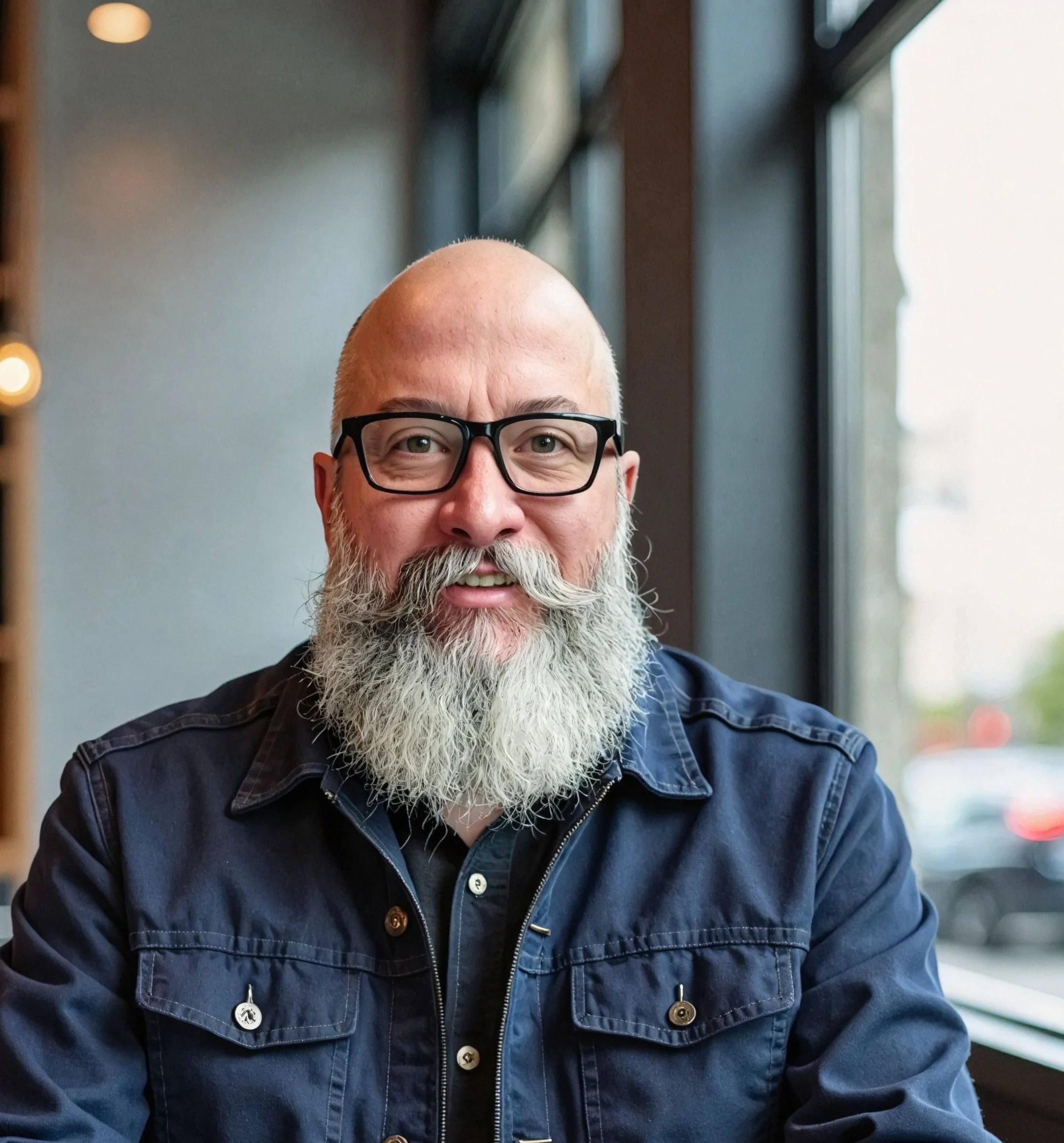
PhD in Counseling. M.Ed. in Marriage and Family Therapy. Licensed Alcohol and Drug Abuse Counselor, LADACII, State of Tennessee. Twenty-five years of clinical experience across mental health, addiction treatment, residential care, and private practice in Knoxville.
Anxiety shows up in nearly every presenting concern I work with, inside addiction, inside relationship strain, inside trauma, underneath the things people come in saying they need help with. I've been working with it directly and alongside everything else for the full length of this career. I don't diagnose it, because the label isn't usually what helps. What helps is understanding how it works specifically for you, and building the capacity to drive the bus.
Where To Next
Let’s Talk
Schedule your free video consultation to meet, greet, and ensure that you're getting the right services for your needs. It takes about 20-30 min and gives you the opportunity to ask questions, and feel confident about who you'll be working with.
Knoxville · Farragut · Oak Ridge · Clinton, TN · Telehealth Available Across Tennessee