
Grief Counseling · Knoxville, TN
Grief Counseling Knoxville
Loss and grief are normal. Your experience of it is yours alone. And we live in a culture that handles the uncomfortable parts so poorly that it leaves you wondering if something is wrong with you. Nothing is wrong with you. And I'm not afraid of those parts, because I've been there too.
What You Are Carrying
There Is No Right Way to Grieve, There Is Only Finding Your Way.
There is a grief playbook our culture hands to people whether they asked for it or not. It tells you there are stages, and that you're moving through them, or should be. It tells you that three days is a reasonable amount of time before you return to functioning. It tells you to be strong, which means keep it inside, don't cry in public, don't let it show. It tells you that other people's comfort with your loss matters, and that your job is to manage it.
None of that is grief work. All of it puts the burden on you to manage everyone else's relationship with your loss.
What you're actually living with might look like one of these:
A loss that happened recently, and the acute wave that hasn't subsided
A loss that happened years ago and still arrives without warning, a smell, a song, a date on the calendar
Grief that looks like depression, a difficulty getting interested in the present, a flatness that people around you have started to notice
Anger at being robbed of the conversation you needed, the reconciliation that never happened, the goodbye that death or illness or time took away
A relationship straining under the weight of loss, two people who can't find each other inside what happened
Something you're not sure counts, a job, a pet, a version of someone who is still alive but no longer present
The pressure to adopt someone else's worldview about death and what comes after, when what you really need is someone to sit with the questions
Whatever it looks like, you're not doing it wrong. There is no right way to grieve. There is only your way, and whether you have the support to carry it.
All of it puts the burden on you to manage everyone else’s relationship with your loss.
What Grief Actually Is
Love Remains. And Now You Have Visitors.
When love loses its object, it doesn't disappear. It stays, and it brings company. Three visitors show up, sometimes all at once, sometimes one at a time. Most people don't have names for them. They are listless and want some help finding their way again.
The first is Loss, and it is wider than most people realize. The obvious losses are tangible: a person, a relationship, a presence that occupied real space in your life. But loss also comes for things harder to see and harder to grieve. The normalcy you counted on. The future you had already imagined. What could have been. What you thought would be. The frameworks and certainties you built your understanding around, and that no longer hold. These losses are real. They qualify. And they often go unnamed, which means they go ungrieved.
The second is Longing, a yearning for wholeness that doesn't resolve into a single clear want. Sometimes it's cosmic: you want to feel complete again, connected to something larger than the rupture. And sometimes it arrives in the smallest possible form, a smell that used to mean something, a sound in another room, a moment where your hand reaches for a phone to send a message to someone who won't receive it. Longing doesn't distinguish between the large and the small. It just aches.
The third is Feeling Lost, the disorientation of having to reorient. Your physical world, your emotional world, your social world were all organized, at least in part, around what you lost. And now they have to reorganize. That work is exhausting and non-linear, and it can leave you feeling unmoored, not sure where you belong, not sure who you are in this new configuration. The goal of grief work is not to end that feeling by force. It's to help you find something to hold on to, to feel tethered rather than adrift.
Grief isn't over when you adapt to the loss. Grieving is learning how to carry on, how to hold the love story, share it, keep it alive in connection with others, while still being present in your own life. That's not a destination. It's a practice. And it doesn't have to be done alone.
Love doesn’t die. It doesn’t stop feeling like love because they are gone. So, Where exactly are you supposed to put it, carry, or whatever?
What Makes It Harder
Platitudes Are Exits. Presence is What Actually Helps
Most people around you are not trying to make grief harder. They just don't know how to stay in the room with it. So they hand you a stage model that doesn't match your experience. They tell you he's in a better place, or everything happens for a reason, or at least you had so many good years. They change the subject. They check on you once and then assume you're fine because you said you were fine. They push their own theology across the table because it comforts them, and they need you to receive it, because your unanswered questions are unsettling.
And then there is the timeline. Three days of bereavement leave before you're expected back at your desk, performing. Which tells you, clearly, what the culture believes about how long grief is supposed to take, and what it's supposed to look like from the outside.
"Be strong" means don't let it show. Which means carry it alone. Which makes it heavier, not lighter. The people who are struggling most are often the ones who look fine, because looking fine was the only option available to them.
What actually helps is the opposite of all of that. Presence. Not fixing. Not framing. Not offering the right words. Just being willing to be in the room with what is true, without needing it to resolve or improve or become more comfortable. That's what this work is.
What Happens Here
Sitting With Someone Is Not the Same as Just Listening.
Grief work isn't technique. It isn't a model or a stage framework or a set of interventions applied to a presenting problem. It's something closer to a transmission, a willingness to be open to experience the grief alongside another person, to connect with what they're actually carrying in the room, to reach toward it with genuine empathy rather than clinical distance.
That is the antithesis of the cultural playbook. The culture exits. This work stays. And the staying, the experience of being with someone who is not afraid of your grief, who will not flinch, who does not need you to manage their discomfort, that is itself a part of the healing. Not because it resolves anything. Because it ends the isolation.
I've had losses. I don't say that to make this about me. I say it because it's relevant, because the reason I'm not afraid of the uncomfortable parts is that I know the territory. I know what it costs. I know that the question of where to put the love that has nowhere to go is a real question, and not one that gets answered quickly or cleanly. That knowledge changes how I sit with someone in it.
The work looks different for everyone. For some people it is the acute phase, the recent loss, the system still in shock. For others it is something older that never got the space it needed. For others it is grief they don't recognize as grief, a job loss, a relationship, a version of themselves they had to let go of. Wherever you are in it, the starting point is the same: you don't have to have the right words. You don't have to have it organized. You just show up with whatever you're actually carrying.
Grief isn’t something to finish. It’s something to carry well enough to still be present for the life that’s here.
Your Loss Counts
You Don’t Have to Call It Grief for It to Be Grief.
The word grief gets reserved, in most people's minds, for death. But loss is wider than that. The career that defined you, and the identity, the social world, the daily structure that went with it. The relationship that ended without a real ending. The pet you had for fifteen years and had to let go of. The parent who is still alive but no longer recognizes you. The future you had mapped out that no longer exists.
Each of those is a real loss. Each one can produce the same hollowing-out, the same difficulty locating yourself in the present, the same question of who you are now that that particular thing is gone. None of them require a death certificate to qualify for grief work.
There is also the anger that comes with losses that were taken rather than arrived at. The person who needed to have a conversation, a confrontation, a reconciliation, a real goodbye, and didn't get it because death came first. Or a coma. Or a diagnosis that changed who the person was before anyone was ready. That particular grief comes with a specific kind of ache: not just the loss, but the absence of the closure that loss interrupted. That anger is grief too. It belongs here.
About This Work
I’ve Been in This Territory.
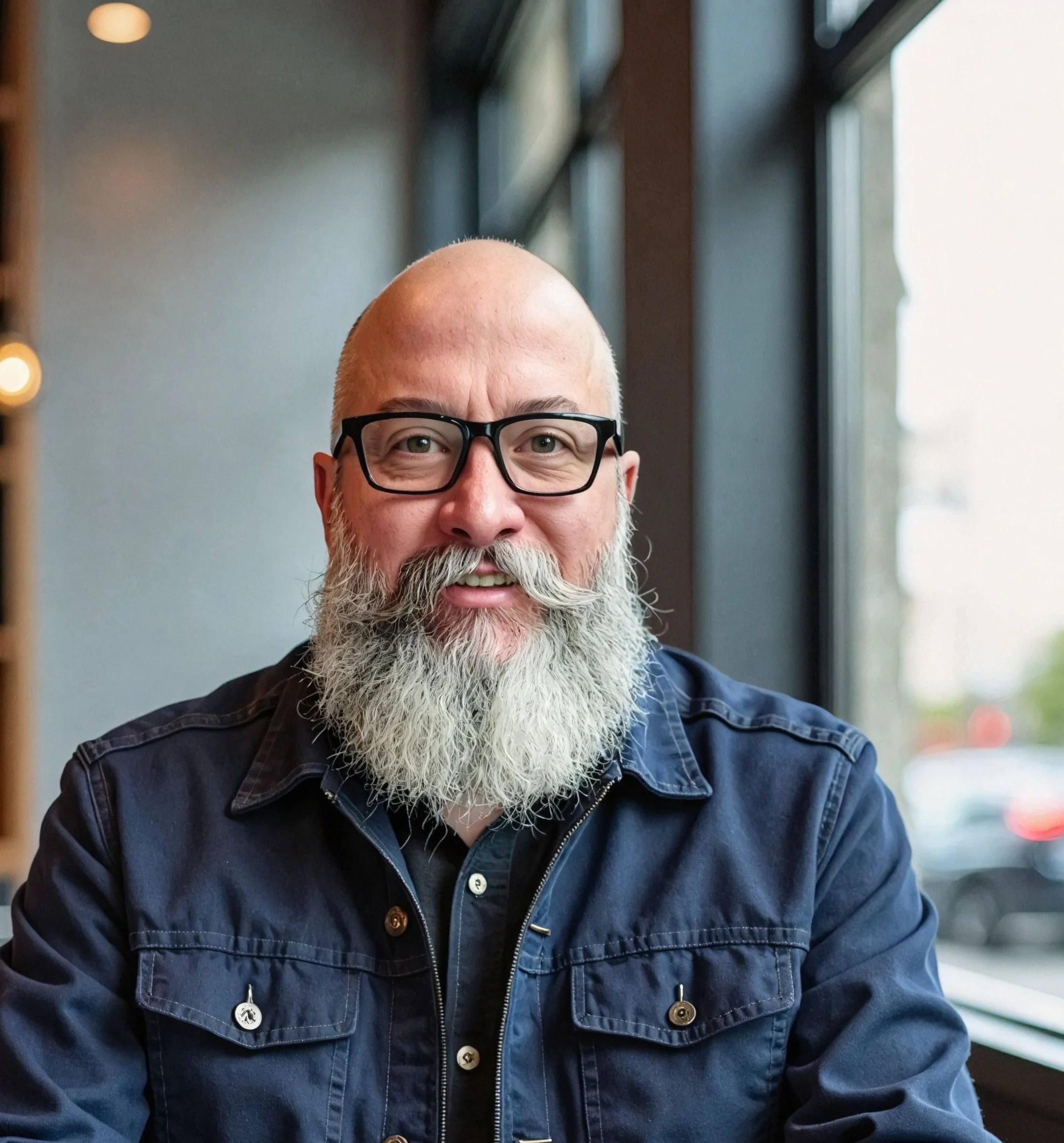
I'm Todd Davis — a licensed counselor and life coach with over 25 years of experience working with people navigating loss, addiction, trauma, and the hard parts of being human. My credentials include an a PhD in Counseling, M.Ed. in Marriage & Family Therapy, and LADAC II licensure, and training in Acceptance and Commitment Therapy.
But the more relevant thing, for this particular page, is that I've had losses. I know what it is to carry something and not be sure where to put it. I know what the culture does with grief, the exits, the platitudes, the timeline pressure, and I know what it feels like when someone finally doesn't do that. That's the experience I bring into the room. I'm not afraid of the uncomfortable parts. I've been there.
I work with individuals and couples in Knoxville, and virtually across Tennessee. If something brought you to this page, a free 30-minute conversation is a real place to start.
When You’re Ready
When You’re Ready, Let’s Talk
Life is suffering. And it isn’t only suffering.
The consultation is free, low stakes, and takes 30 minutes. You don't need the right words. You don't need a clean story or a clear presenting problem. Show up with whatever you're carrying, the loss, the anger, the love that doesn't know where to go. That's enough to start.
Knoxville · Farragut · Oak Ridge · Clinton, TN · Telehealth Available Across Tennessee