Marriage & Alcohol · An Honest Answer
Can a Marriage Survive Alcoholism?
Maybe. And the honest answer is more complicated, and more hopeful, than you might expect. It may also be different from anything you've been told so far.
First, The Word Itself
Alcoholism Is a Label. It Doesn’t Describe Your Marriage.
The word alcoholism carries enormous weight, moral, cultural, religious, medical. Society has strong opinions about it. So does the healthcare system. So does whoever first used that word in your home.
But here's what twenty-five years of sitting with couples has taught me: almost nobody sees themselves as an alcoholic. And the reason isn't always denial. It's that the label genuinely doesn't fit the complexity of what's actually happening. Someone else's consumption is always worse. The circumstances are always different. The word flattens something that is, in reality, an individual story with its own texture, history, and meaning.
Alcohol use disorder is a clinical diagnosis. Alcoholism is a cultural label. Neither one fully describes the dynamic playing out in your marriage. That dynamic is a story only you can tell, and it's the story we'd actually work with.
There's also something worth saying that almost nobody in this space says plainly: the assumption that alcohol use must stop completely before a marriage can recover is not a fact in evidence. Millions of people live with a partner who drinks too much, and their marriages don't fail. The goal isn't necessarily abstinence as a precondition for everything else. The goal is a marriage both people can actually live in, and what that requires depends entirely on your specific situation.
There is something else worth saying that almost nobody talks about. Many marriages don't fail during the addiction. They fail after rehab, when the drinking stops and both people discover that sobriety didn't fix what was actually broken. The relationship itself was the problem. The addiction was covering it. When it's removed, two people are left looking at each other across a distance that was always there, now with nothing to blur the edges. That's not a reason to avoid recovery. It's a reason to work on the marriage at the same time.
The word flattens something that is, in reality, an individual story with its own texture, history, and meaning.
How It Starts
Nobody Decides to Let Alcohol Take Over Their Marriage
Most people have consumed alcohol at some point and experienced it as normal, social, enjoyable. That's where it begins for most people, unremarkably, in perfectly ordinary circumstances. The hook enters imperceptibly slowly. A drink to unwind. A few more on harder nights. A pattern that develops so gradually that neither person can point to the moment it changed.
That gradual exposure matters. The problems that follow, the emotional unavailability, the broken promises, the tension that fills the house, the health consequences that emerge later, these didn't happen because of a character flaw or a moral failure. They happened because the hook was subtle and the line between use and harm is crossed slowly, quietly, and often without either person fully realizing it until the damage is already accumulating.
Understanding how it starts doesn't excuse where it went. But it changes the conversation. It removes some of the judgment that makes honest conversation between two people almost impossible. And it opens a door that shame keeps firmly shut.
The Honest Answer
Maybe. And Here Is What Actually Determines It.
The marriages that survive, genuinely survive, not just endure, tend to share something in common. Not love. Not commitment alone. Not the complete absence of alcohol. Those things matter, but they aren't what carries a marriage through something this hard.
What carries it through is skills.
The ability to solve problems together. To accept one another honestly, not perfectly, not without pain, but without pretense. To repair damage when it's been done rather than letting it calcify into resentment. To see your partner suffering and resist the instinct to rescue them from it, to instead create space to hear them, validate their pain, and empower them to move toward something rather than simply removing the discomfort for them. To apologize in a way the other person can actually receive. To move toward a shared purpose rather than simply coexisting in the same space.
That last skill, validating without rescuing, is one of the hardest things a couple in this situation can learn. The natural instinct when someone you love is suffering is to fix it, absorb it, manage it. That instinct comes from love. And it almost always makes things worse. Because fixing someone's discomfort removes the suffering that change requires.
These are learnable skills. Not character traits you either have or don't. Skills. Which means they can be built, practiced, and carried forward into whatever the marriage becomes.
What carries a marriage through is skills — not love alone, not commitment alone.
What Keeps People Stuck
Fighting on Terrain Where You Cannot Win.
The coping treadmill: working hard, expending enormous energy, making no forward progress. A drink to make the uncomfortable go away. An escape to avoid the pain of daily life. Those fixes work for a moment. Then the moment passes and everything is exactly where it was.
Or think of it this way: fighting addiction by sheer force of will is like a tug of war with something that doesn't tire. The harder you pull, the harder it pulls back. Winning doesn't look like pulling harder. It looks like setting down the rope, not surrendering, but refusing to keep fighting on terrain where you cannot win, and turning instead toward something worth moving toward.
The underlying pain that started this, the discomfort that alcohol temporarily relieved, may be a mystery that is never fully solved. And that's alright. What experience suggests is that moving toward a life we love, toward the people and things that matter most, often breaks the gravity of the past more effectively than excavating its causes. Not because the pain disappears. Because something worth moving toward becomes stronger than what's pulling us back.
Change in this territory is rarely a clean cut. Most people return to alcohol off and on many times before breaking its orbit. Some find moderation. Some find abstinence. The path is nonlinear and it looks different for every person. What determines the direction isn't willpower. It's clarity about what kind of life, what kind of person, what kind of marriage you actually want, and whether that vision is strong enough to pull you toward it even when the discomfort is loud.
Addiction is not a character flaw. It is not a moral failure. It is not a sign of weakness. It is what happens when a person is exposed to an addictive substance in the context of pain that needed somewhere to go. Understanding that doesn't change what needs to change. But it changes who you are while you're changing it.
You are not your addiction.
What I See When Couples Come to Me
We Only Hurt Where It Matters
When couples find their way here, exhausted, burned out, having tried everything they know how to try; the first thing I notice is pain. Both of them. The one whose drinking has taken over and the one who has been waiting, managing, and hoping.
That pain is not a bad sign. It is actually the most important sign.
We only hurt where something matters to us. The fact that this hurts, that you're still searching for answers at whatever hour you found this page, means something in you hasn't let go of what this marriage could be. That matters. It's the raw material we work with.
What I also see in survivable marriages is something that looks, on the surface, like hopelessness. The same conversations. The same ultimatums. The same promises. The same temporary relief that doesn't hold. A coping treadmill that goes nowhere. Those fixes work for a moment. Then the moment passes and everything is exactly where it was.
Hopelessness is the mother of creativity.
Hopelessness is the mother of creativity. When you have genuinely exhausted every familiar option, something shifts. The willingness to try something genuinely different becomes available in a way it wasn't before. That's not defeat. It's an opening.
What a tragedy to spend a life on that treadmill instead of moving in the direction of something meaningful.
What a tragedy to spend a life on that treadmill instead of moving toward something meaningful.
What This Means For Your Marriage
Your Marriage Is Not a Statistic. It’s a Specific Situation.
Whether your marriage can survive depends on factors that belong entirely to you, your history, your patterns, your capacity and willingness to learn something new, and what you're each actually willing to bring to this.
It does not depend on a label. It does not depend on how many years this has been happening or how bad it got. It does not depend on whether your spouse has been to treatment before or whether you've had this conversation a hundred times already.
It does not even depend on whether drinking stops completely before anything else can improve. That assumption, that sobriety must come first before the marriage can heal, isn't always true. What it depends on is whether both people are willing to build something strong enough to navigate whatever the path actually looks like. Including the nonlinear parts. Including the return trips. Including the hard work of becoming people who can hold each other's pain without losing themselves in it.
That's a question only a real conversation can begin to answer.
If betrayal is part o f what’s broken, betrayal trauma counseling addresses that directly.
The Formal Part
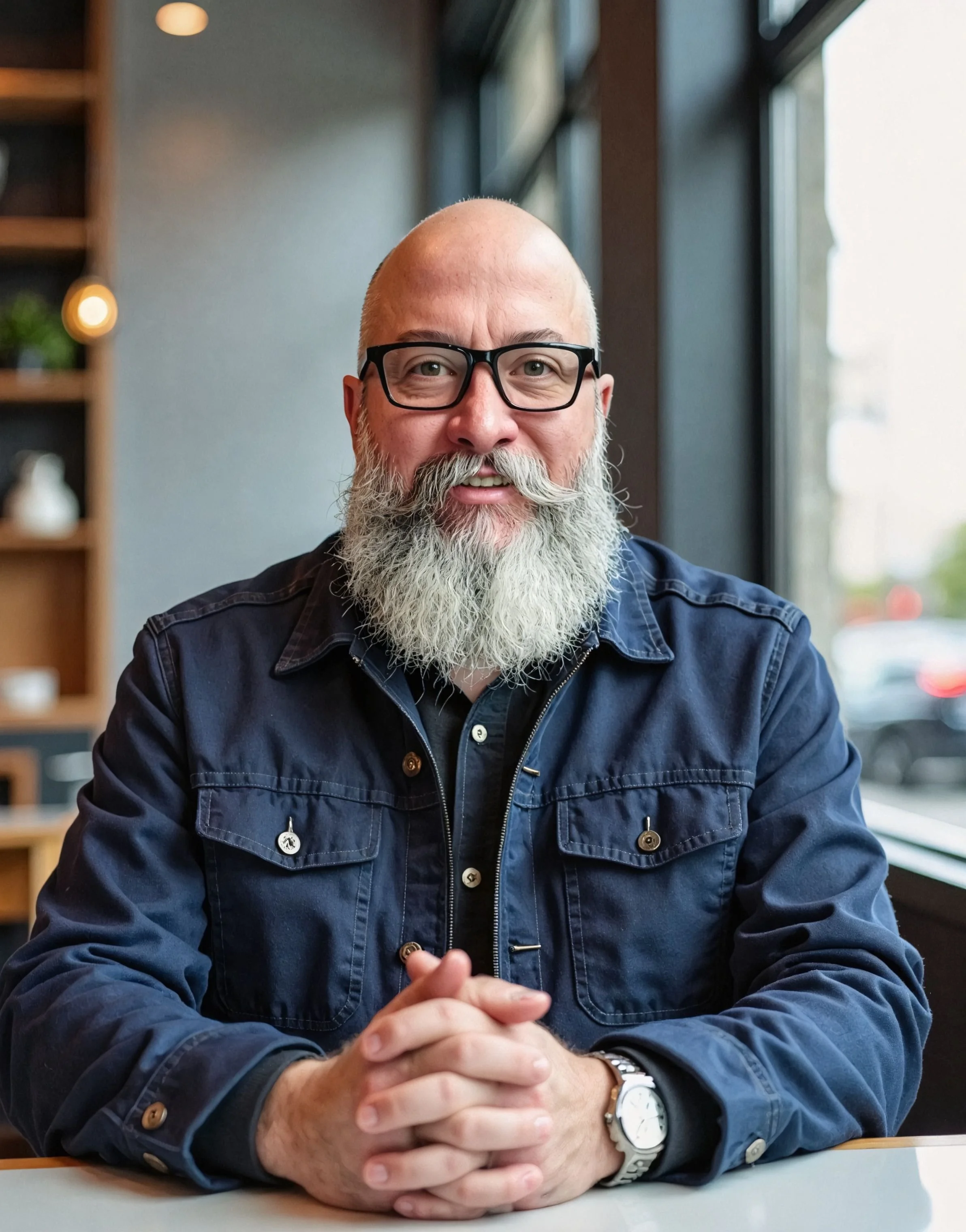
Twenty-Five Years, And Counting.
PhD in Counseling. M.Ed. in Marriage and Family Therapy. Licensed Alcohol and Drug Abuse Counselor (LADAC II), State of Tennessee. Twenty-five years of clinical experience across mental health, addiction treatment, residential care, and private practice.
If you want to know more about the background, the consultation is a reasonable place to ask. What most people want to know first is simpler: whether you can actually talk to me. I think you can. But that's for you to decide.
When You’re Ready
Maybe That Creates More Questions Than It Answers.
That's actually a good place to be. The right questions are the beginning of something new.
Schedule a free 30-minute video conversation and we can talk through what this looks like for your marriage specifically, not in general, not statistically, but for you.
Knoxville · Oak Ridge · Lenoir City · Clinton, TN · Telehealth Available Across Tennessee